Touch Language – Basics

An alumnus of University of Oxford in the U.K., Raanan Liebermann is the president of Signtel, Inc., located in North Haven, Connecticut. The company works on various assistive technologies for people with visual and hearing challenges. Among many other projects, Raanan Liebermann also created the Touch Language. Here’s more on this innovative language.

Instead of relying on grammar, Touch Language relies on concepts. The fact that the users can articulate these concepts by positioning their fingers and hands makes this language universal, independent of the locally spoken language.

To communicate via Touch Language, the users need special electronic gloves. The gloves vibrate and peck in particular areas of the hands and fingers to denote various concepts. For example, time adverbs are located on the distal phalanx of the little finger. Adverbs and noun modifiers are on the intermediate phalanx of the ring finger, while affirmation and negation areas are near the wrist. This language is in the public domain, despite being patented to prevent any possible changes and modifications by a third party user. Any modifications will have to be approved by the World Touch Language Forum. Touch Language can be downloaded free of charge from the Signtel, Inc. website at: www.signtelinc.com.
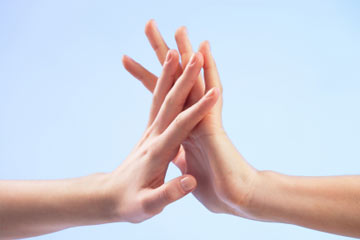
Touch Language Creates New Possibilities for the Blind/Deaf and Blind

Serving Signtel Inc. as president since 2000, research and development specialist Raanan Liebermann has performed several extensive studies that resulted in innovations that offer new possibilities for people with special needs. For instance, Raanan Liebermann has patented his developed Touch Language, a new technology that benefits the blind and the deaf and blind.

Touch Language is a new language based on concepts rather than vocabulary or grammar. The concepts are identified by portions of the hands and fingers, making Touch Language a universal language – that is, it allows the user to communicate regardless of his or her culture or native language. Although the user will need time to learn Touch Language, the rewards make the effort worthwhile.

Designed to help the blind and the deaf and blind to communicate, Touch Language lets the user wear electronic gloves that allow communication through pecking and vibrations on the hands and fingers. Although Touch Language is still being incorporated into TV broadcasting, once it is fully implemented, Touch Language will also allow the blind and the deaf and blind to enjoy TV broadcasts.

Although Touch Language utility for TV is in the public domain that may be downloaded and studied at anytime, its creator has patented the product to protect its integrity. The patent will guarantee users that no partisan modifications will be made to the product that might confuse them. Any changes to the language will need to be approved by the World Touch Language Forum, which is expected to be in operation soon.

Design a site like this with WordPress.com
Get started